Pre-Prosthetic & Prosthetic Training
Comprehensive physical therapy rehabilitation for patients preparing for a prosthetic limb or adapting to a new device — building the strength, mobility, balance, and confidence needed for maximum functional independence at every stage of the journey.
Understanding Your Treatment
Expert Rehabilitation at Every Stage From Limb Loss to Full Functional Independence
Limb loss whether due to amputation following vascular disease, diabetes, trauma, infection, or cancer is one of the most significant physical and psychological events a person can experience. The rehabilitation journey that follows is equally significant, and the quality of physical therapy support received at each stage has a profound impact on functional outcomes, prosthetic success, and long-term independence.
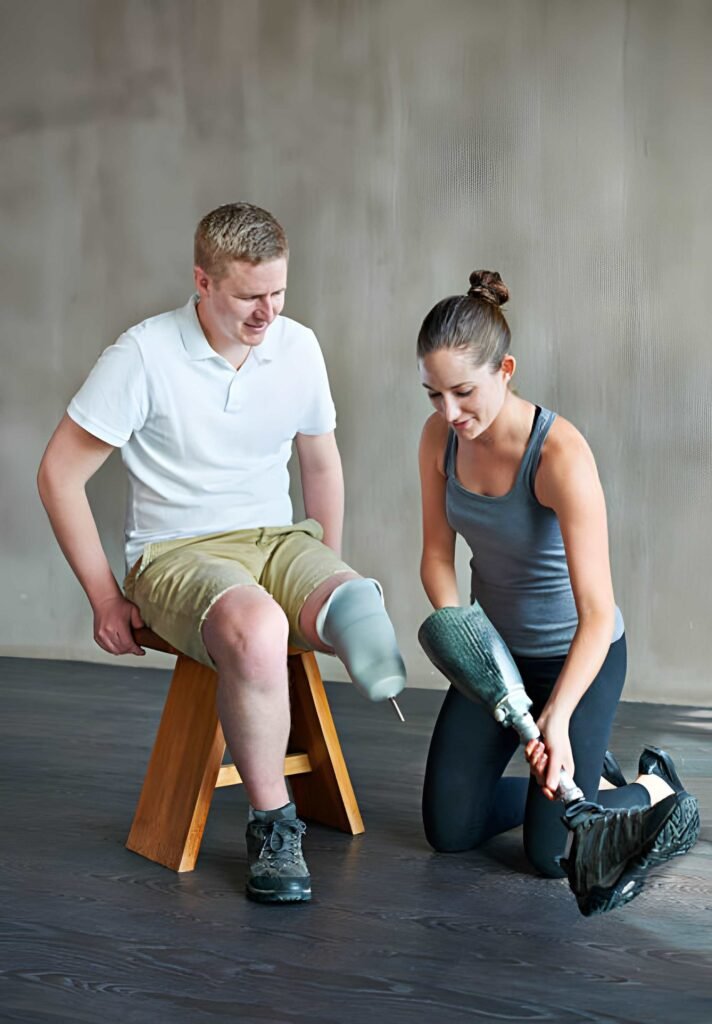
Pre-prosthetic rehabilitation refers to the physical therapy provided between amputation and prosthetic fitting a critical period that is often underutilized but has a major influence on how well a patient adapts to their prosthetic device. The goals of pre-prosthetic rehabilitation include residual limb conditioning, wound healing support, pain management, strengthening of the remaining limb and upper body, cardiovascular conditioning, and psychological preparation for prosthetic training.
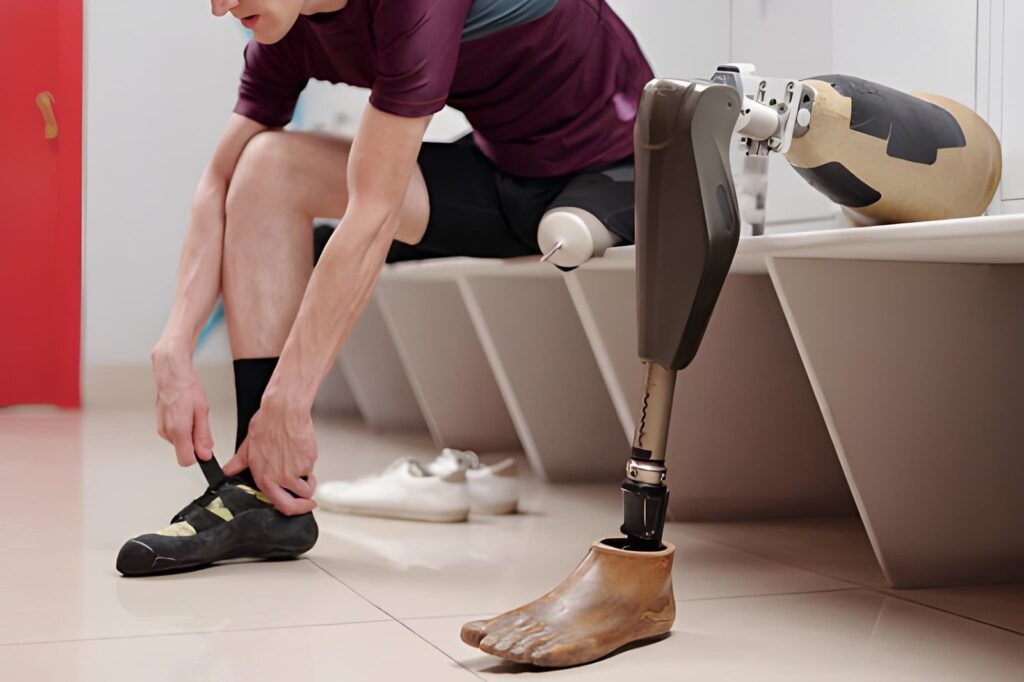
Prosthetic rehabilitation begins once the prosthetic device is fitted and focuses on teaching the patient to use their device safely and effectively in progressively demanding real-world environments. This includes gait training, balance and fall prevention, stair and ramp navigation, community mobility, and education on skin care, device maintenance, and safe daily use. The goal is not just to walk it is to regain the broadest possible range of functional independence across all daily activities.
At Polaris Rehabilitation, pre-prosthetic and prosthetic training is delivered by a physical therapist with combined credentials in physical therapy, prosthetics, orthotics, and pedorthics bringing a uniquely comprehensive perspective to each patient's rehabilitation that encompasses both the clinical and device-related aspects of their recovery.
Is This Service Right for You?
Rehabilitation Support for Patients at Every Stage of the Prosthetic Journey
Our pre-prosthetic and prosthetic training service supports patients from the immediate post-amputation period through to long-term prosthetic use — addressing the changing physical and functional demands of each stage with a personalized, goal-directed rehabilitation approach.
Recent Amputees Awaiting Prosthetic Fitting
Patients in the post-amputation period benefit enormously from structured pre-prosthetic rehabilitation — conditioning the residual limb, preventing complications, building the strength and fitness needed for successful prosthetic use, and preparing physically and mentally for the next phase of rehabilitation.
Patients Receiving Their First Prosthetic Device
The transition to using a prosthetic limb is physically and cognitively demanding. Structured gait training and functional rehabilitation from a physical therapist ensures patients learn to use their device safely and effectively — maximizing prosthetic success and minimizing fall risk.
Patients Upgrading or Changing Prosthetic Devices
Changes in prosthetic technology, socket fit, or device design require a period of rehabilitation to adapt gait patterns and functional habits to the new device. Structured PT support during device transitions ensures patients achieve optimal outcomes from their new prosthetic.
Patients with Reduced Strength or Deconditioning
Patients who have become deconditioned following amputation — due to prolonged hospital stays, comorbidities, or limited rehabilitation access — benefit from a progressive strengthening and conditioning program to restore the physical capacity needed for prosthetic success.
Patients with Balance & Gait Difficulties
Patients experiencing difficulty with prosthetic gait, balance problems, or increased fall risk benefit from targeted balance re-education, gait analysis, and functional training — restoring confidence and safety in daily mobility.
Patients Returning to Active or Community Life
Patients whose rehabilitation goals extend beyond basic household mobility — including return to work, outdoor activities, or social participation — benefit from advanced functional training that prepares them for the full range of community and recreational demands.
Your Prosthetic Rehabilitation Experience at Polaris
A Structured, Compassionate Rehabilitation Journey From Amputation to Independence
Rehabilitation following limb loss is a journey with distinct phases — each requiring specific clinical focus and progressively expanding goals. At Polaris, every step of that journey is guided by an experienced physical therapist who understands both the clinical and human dimensions of prosthetic rehabilitation.
Initial Assessment & Pre-Prosthetic Program
Your rehabilitation begins with a comprehensive evaluation covering your amputation level and type, residual limb condition, wound healing status, medical history, current strength and fitness, balance, and functional goals. A pre-prosthetic program is developed addressing residual limb shaping and desensitization, edema management, range of motion, strengthening of the residual and sound limb, core stability, upper extremity strength, cardiovascular conditioning, and transfers. This phase builds the physical foundation for successful prosthetic fitting and use.
Prosthetic Fitting Preparation & Liaison
As your residual limb matures and your physical conditioning progresses, preparation for prosthetic fitting begins. We work in coordination with your prosthetic provider to ensure your physical readiness for fitting — communicating your rehabilitation progress, functional goals, and any clinical considerations that should inform device selection and socket design. Patient education at this stage covers what to expect from the fitting process, how to care for the residual limb during the fitting period, and how to begin wearing the device safely.
Prosthetic Gait Training & Functional Rehabilitation
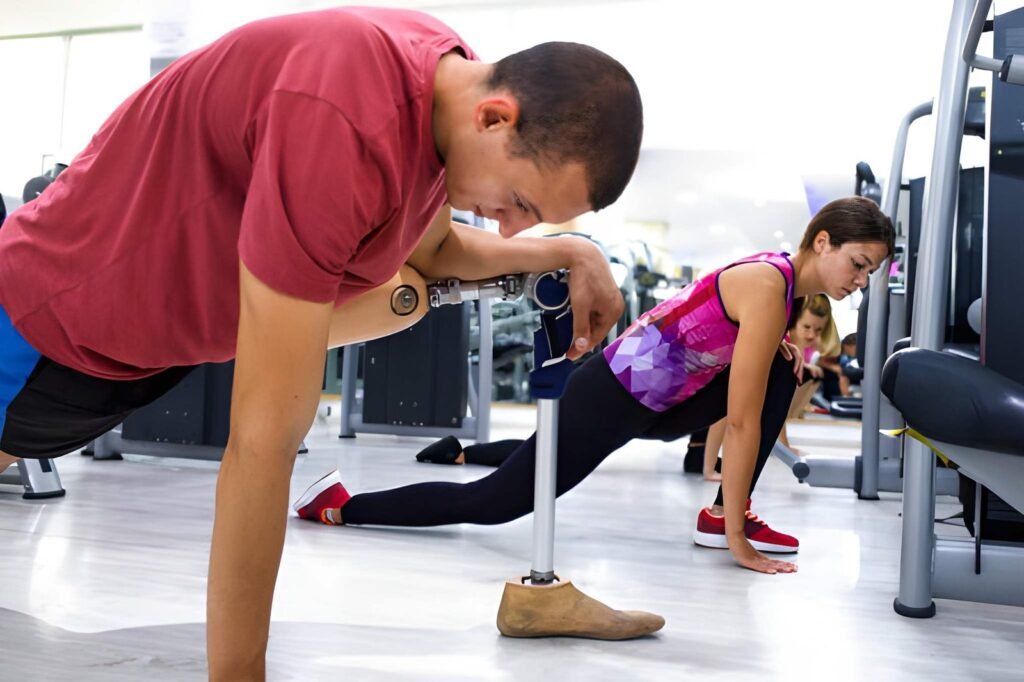
Once fitted, structured gait training begins — progressing from parallel bar walking to independent indoor ambulation, outdoor surfaces, ramps, stairs, and community environments. Balance training and fall prevention strategies are integrated throughout. Functional task training addresses the full range of daily activities — sitting to standing, car transfers, carrying objects, and navigating real-world environments. Energy conservation, prosthetic donning and doffing, and skin integrity monitoring are taught and reinforced at every session.
Advanced Function, Community Mobility & Discharge
As prosthetic competence develops, training advances toward higher-level functional goals — including return to work activities, recreational participation, and community mobility. A home exercise program and self-management strategy is established. Discharge planning ensures patients leave with the knowledge, skills, and confidence to manage their prosthetic device, monitor their residual limb, recognize potential complications, and continue building function independently beyond formal rehabilitation.
What Structured Prosthetic Rehabilitation Can Do for You
6 Key Benefits of Expert Physical Therapy Throughout Your Prosthetic Rehabilitation Journey
Alma's credentials span physical therapy, pedorthics, orthotics, prosthetics, and advanced scoliosis rehabilitation a rare combination that allows for truly comprehensive, whole-body care under one roof.
Optimal Physical Readiness for Prosthetic Fitting
Pre-prosthetic rehabilitation ensures the residual limb is well-conditioned, the body is strong, and the patient is physically and mentally prepared maximizing the chance of a successful first fitting and rapid prosthetic progression.
Safer, More Efficient Prosthetic Gait
Structured gait training teaches patients to walk with their prosthetic device as naturally and efficiently as possible reducing compensatory movement patterns, minimizing fall risk, and improving walking endurance and comfort.
Improved Balance & Fall Prevention
Balance training is a critical component of prosthetic rehabilitation — building the proprioceptive awareness, strength, and confidence needed to navigate real-world environments safely and independently.
Greater Daily Functional Independence
Functional task training across transfers, stairs, outdoor surfaces, and community environments prepares patients for the full range of daily life demands — moving beyond clinic-level function to genuine community independence.
Reduced Complications & Skin Problems
Education on residual limb care, prosthetic fit monitoring, and skin integrity management significantly reduces the risk of skin breakdown, socket fit problems, and the complications that disrupt rehabilitation progress.
Restored Confidence & Quality of Life
Beyond physical function, structured prosthetic rehabilitation restores confidence in movement, reduces fear of falling, and supports the psychological adjustment to limb loss — helping patients reclaim an active, engaged, and meaningful life.
Progressive Goals From Parallel Bars to Community Life
Prosthetic rehabilitation is built on progression. Each stage — parallel bar walking, independent indoor ambulation, outdoor surfaces, and finally full community mobility — expands what's possible. Your program advances at the pace your body and confidence allow, with every milestone building toward genuine, lasting independence.
Every Step Forward Starts With the Right Support.
Begin Your Prosthetic Rehabilitation at Polaris Rehabilitation
The path from amputation to independence requires expert guidance, structured rehabilitation, and a clinician who understands both the physical and personal dimensions of your journey. At Polaris Rehabilitation, we are committed to supporting you at every stage — from pre-prosthetic conditioning through to full community mobility and beyond.
Serving Youngsville, Wake Forest, Franklinton & greater Franklin County, NC.